
A Conversation with Dan Schlossberg
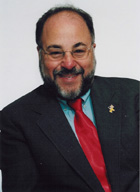 Lately, we’ve been running interviews of travel writers who have made their niche by combining something they love with the art of travel. In this next case it’s baseball! This week, I spoke with Dan Schlossberg about how he has had the time to author over 35 books on baseball while still keeping travel at the heart of his work. Co-founder, president, and newsletter editor for NATJA, Dan has also been the travel editor for New Jersey Lifestyle, Hooters Magazine, and is currently a radio broadcast journalist for XM Satellite Radio. Check out his website here!
Dan, how did you “break in” to travel writing? What have been the keys to your success?
I guess the best way to describe this is to say that I went to Syracuse University and got into journalism–although I wasn’t even aware that travel writing was a niche. In the late 1960s in J school, “travel writing” wasn’t even mentioned–not even once. You’d think a school like that would have mentioned it…but it wasn’t.
My first ambition was to be a White House correspondent, but I was an idealist and I didn’t want to cover the Nixon White House, so that never happened. My other real dream–to write about baseball–started when I began writing for The Orange. Then, in July 1969, I got offered a job with the AP in New Jersey as a sports editor. I was there for two years and ended up becoming the broadcast editor (I wrote hourly newscasts for 52 radio and TV stations). The job had heavy deadlines and lots of pressure, but it was a great learning experience.
So why travel writing? Basically, after those first two years, I just got tired working nights and weekends. During that time, I’d been working with three of the regional editors for Motor Club News (put out by AAA’s rival, Motor Club of America), and because Motor Club is primarily an insurance company–in addition to being a travel agency–they wanted more publicity. So I started going to more press conferences, met editors of other publications (like Travel Holiday and AAA mags), and started writing for them. For someone in their early 20s to make some extra money, that sounded pretty good. People started booking business because of my articles, so I knew something was going right.
So, the key to success? Being in the right place at right time! Sounds like a cliché, I know, but it’s true. 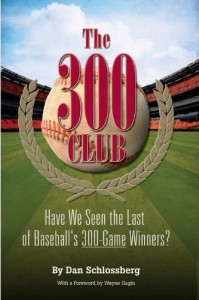
Were there any conflicts between the publications you were simultaneously writing for?
Not at all! When you’re a freelancer, you can make pitches on what you want to do, and then you do it, which is great.
Where do you see your career as a travel writer being three years from now? How will your income mix change and what are you doing to adapt to the changing media landscape?
Very good question, actually. Like Clark Kent, who is my fantasy idol, I see myself already morphing from a print to a broadcast journalist. Since 2008, I’ve been involved in “The Maggie Linton Show” on Sirius XM radio–difference is interesting, because you have a lot less room to move as a broadcast editor–15-20 minutes per report–when you’re interviewing somebody, it’s not quite the same as going somewhere and writing about it. Digital media–especially broadcasting–have been very good to me.
In 3 years? I hope I’ll still be writing. What I’m seeing, like a lot of AAA print publications, is that a lot of them are merging and taking content from central sources, primarily because the economy is not good. Many of them are trying to consolidate, which, in my opinion, creates problems for freelancers. As a result, things become more competitive in digital markets, because as these print venues are losing ad revenue, more people are going over to the digital marketplace. If you have a good reputation, that should supersede the competition and help you succeed.
So as I mentioned, I see myself heading more toward broadcast journalism. Sirius XM is subscription radio–we just got, if you can believe it, our 20 millionth paid subscriber. Any time you rent a car? Sirius XM is almost always in rental cars. It offers stuff that’s not on regular radio channels. It’s even got decade channels. Let’s say you’re a Frank Sinatra fan: you can listen to a channel–a Frank Sinatra channel–without any commercials. Plus, Sirius has 15 channels of baseball coverage, and broadcasts every major baseball game of every season. I’m a huge fan of the Atlanta Braves, for instance, and I can hear every game.
As I started researching your work, I was amazed to find that in addition to doing travel writing, you have authored 35 books—most of which, I was surprised to discover, deal with baseball. How do you balance the different kinds of writing that you do, and do you find travel writing and sports writing to be a similar creative process for you?
In one word: fun! Both are fun. Going to see a different or even familiar place–like going to baseball spring training–is so much fun. Plus, I often tie baseball and travel together. Let’s say there’s an All-Star game in Kansas City–I’ll write about both at the same time. For example, I’ll find out that the Negro Baseball Museum and the Jazz Museum are both in Kansas City, and then I’ll generate travel articles while I’m there to cover baseball.
You are the Co-Founder, Awards Chairman, and President Emeritus of the North American Travel Journalists Association. NATJA hosts annual conferences for travel writers and provides excellent networking resources. Can you talk a little bit about how working with this organization has affected your own travel writing and your understanding of the industry?
We founded NATJA in January of 1991—which means we just reached our 21st anniversary month. We’re the 2nd oldest travel journalist organization to SATW. We’re meaner and leaner. We founded the organization, back in New Jersey, because we felt there was a need for a non-political counterpart to SATW. At the time, you had to be sponsored by two members, so people were getting into SATW who shouldn’t be and people weren’t getting in who should be. For us, you only had to prove that you were a practicing journalist each year. We started with 6 members and now we’re pushing 500.
Conferences began in 2003. The reason it took so long was just because we were too small. When Elizabeth Beshir came on board (she was involved with a digital company called Apollo Interactive), we were able to print our newsletter, get our first website going, and start conferences. Our first one was in Newport Rhode Island, and we’ve had annual conferences ever since. Great networking and social opportunities, a lot of face-to-face contact—there’s nothing like it. Meeting other writers and broadcasters is great. You can also learn about other media outlets. My baseball writing, for instance? People often ask me to write about other sports, and I always pass it on to other writers I meet, many of whom I meet at our NATJA conferences.
The last part here is a very good question. Working with NATJA has helped me a lot with context. I created and now run the NATJA awards competition, which we just finished and announced a few weeks ago. This competition is open to all travel journalists (you don’t even have to be a member). From that point of view, then, it’s been nice to work with so many writers. All of our entries are always so good–it’s always hard to decide.
___
Dan Schlossberg is the travel editor of “The Maggie Linton Show” on Sirius XM Satellite Radio, senior contributor to a Connecticut radio show called “Travel With Kal,”and president emeritus of the North American Travel Journalists Association, an organization he co-founded in 1991. He is the former travel editor of New Jersey Lifestyle, Hooters Magazine, and At Your Leisure and the former president of the Working Press Association of New Jersey. His byline has appeared in AAA publications, inflight magazines, and many major newspapers and periodicals.
The winner of numerous honors and awards, Schlossberg is a member of the American Society of Journalists and Authors, the Society for American Baseball Research, and the Garden State Journalists Association. He is also a frequent after-dinner speaker and the author of 35 baseball books, including The 300 Club: Have We Seen the Last of Baseball’s 300-Game Winners?
Interview conducted in February, 2012 by Kristin Mock.
About Author

Kristin
Kristin Winet is an award-winning writer, photographer, and teacher. She has contributed to Afar, Roads & Kingdoms, Atlas Obscura, Perceptive Travel, and other quality publications. See more at KristinWinet.com.