
Michael Turtle: Australian Blogger and Freelance Writer
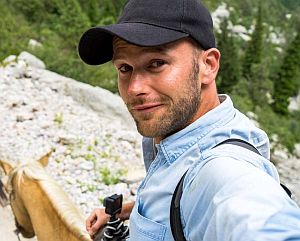 Michael Turtle is a freelance travel writer from Sydney, Australia who also runs two blogs: Time Travel Turtle, which he has been running since 2011, and Travel Australia Today, which launched in 2020. After hanging out with him for the third time on three continents, I got him to sit down for an interview to share his story and advice.
How did you get started as a professional travel writer and blogger?
I started in 2011. I’d been a journalist in Australia for 10 years or so. Most of the time I was at our national broadcaster, the ABC, as a TV and radio reporter. So that was sort of doing everything: crime, politics, whatever a news reporter does. I had a bit of a niche towards the end, which was education and youth issues, but I was a general reporter, basically.
Then I spent a couple of years at a commercial TV station, working behind the scenes on the breakfast show. But then I thought, “I want to go and tell my own stories. What am I doing here, 9 to 5 in a cubicle?” Except it was really 7 till 7 in a newsroom.
So I just set off and didn’t really have a plan. If anyone reading this was active in 2011, you know that you didn’t really come into blogging with a business plan. You kind of went into blogging because you wanted to do it and then tried to work out how to make it sustainable day by day. Whereas now I think people do come in with an idea of how they’re going to earn from it from the start.
Also there just weren’t the opportunities you have now back then. There weren’t these ad networks and travel-focused affiliate networks, so it wasn’t obvious how to monetize it. I wrote what I considered to be different types of stories than maybe what a lot of other bloggers were doing. Back in 2011, a lot of it was very diary style. A lot of “I did this, I did that,” which is fine—those people had followings and it served a purpose, but I sort of came in with my journalistic background and I tried to write stories a bit more closely aligned with how a newspaper or a magazine might write stories, but with the flexibility that a personal blog gave you.
So I focused a lot on telling the stories of people I met along the way or the heritage or the culture of places. At the time, I think that helped me because I stood out a little bit from maybe some of the other content that was out there.
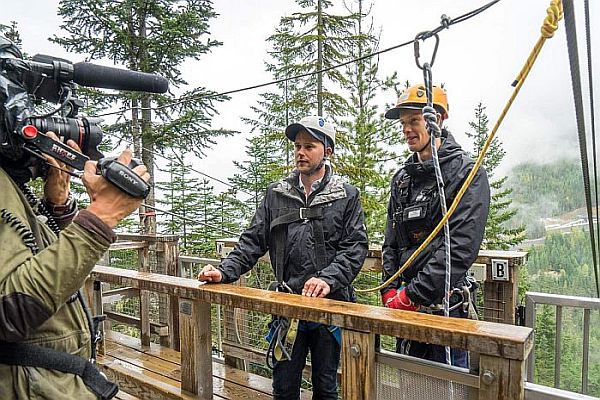
Eventually I moved into working a lot with tourism boards in particular, as well as some tour companies to tell stories about their destinations, showing why those destinations were unique, what was special about them. It’s very different now. People don’t use blogs in the way they used to. Instagram launched around the same time I started; people didn’t have social media in the way that they do now. YouTube was in its infancy compared to what we see now. So people actually used blogs almost in the way they use social media now. I miss the days of RSS readers where people subscribed to all the blogs that they wanted and they would get a news feed of all the new posts. You were able to write interesting stories because people would see your headline and click through if it was an interesting story.
Now people don’t really do that. You need to rely on SEO a lot more or lean into newsletters more if you do want to do that style still.
How long were you stuck in Australia during COVID and what did you do during that time?
Everyone in Australia was stuck for two years, basically. And quite often we were even stuck within the state: different states had different rules. So sometimes I was stuck in New South Wales, which is the state that Sydney’s in. And there were periods where Sydney had a rule that you couldn’t go beyond 5 kilometers. So sometimes I didn’t move beyond my suburb for a month or two.
There was a big silver lining for me in that coincidentally, at the start of 2020, I decided that after being nomadic for nine years, it was time to have a bit of a base. I’d gone back to Sydney where I’m from and had bought an apartment literally the week before the shutdowns started in Australia. At the time I was very worried that I’d made the wrong decision. But it turned out to be quite nice that after not really having a home for nine years, I was forced to have a home and reconnect with family and friends. I had to slow down and get into a bit of a routine, which was nice after so much travel.
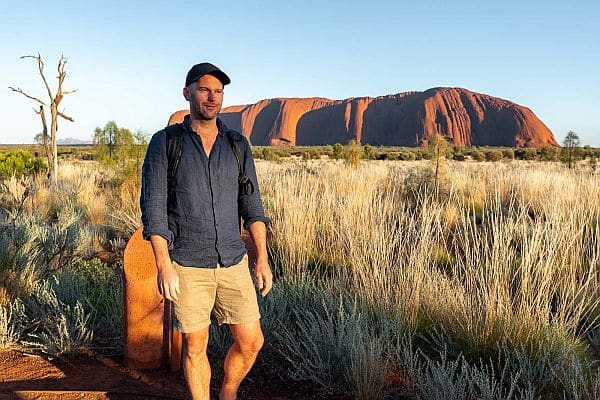
It also meant that I was able to focus on one of my goals, which I’d been putting off for a little while, which was to do more Australian travel. As writers and bloggers, we think that we should be running around the world and finding exciting, exotic stories everywhere. But actually there are some amazing stories in our own backyards, wherever those backyards are. And I’ve found that they’re a bit easier to tell well because you kind of know the context and you know the background. You speak the same language and not even just the same literal language, but you know the same lingo. You can have conversations with people and actually understand the subtext of what they’re talking about. You can focus on the details and the nuances rather than just trying to get your head around the big picture, which I find can happen sometimes when you’re overseas.
How have things gone since the “helpful” content update from Google in 2023 and its subsequent changes. Did the regional site fare better?
Thankfully, the HCU didn’t affect me directly, but then there were subsequent algorithm updates that did. On my main site, certainly the traffic’s gone down quite significantly. Although income probably went up overall, which we can get into in a minute. But having the Australian site definitely helped. It wasn’t so much that Australians were now focusing on Australian travel and looking for resources, although that was certainly part of it. My theory, which was based on a lot of research from other people, is that becoming a bit more niche and focusing on something that you’re an expert on, your own country, actually works quite well under the current search conditions.
So it hasn’t grown into massive numbers, but it’s actually done very well and has not had the same ups and downs that the other site and many other people’s sites have had over the last couple of years with Google. It hasn’t been too affected, either positively or negatively, by major updates. And I think that might be because it says what it is and it does what it says it’s doing. And it does that consistently.
Is the affiliate income different or better on the regional site? You said your income’s gone up overall. Why?
I think income has done well because of diversification. If you have multiple ways of earning income, then some go up and some go down. So display advertising income went down because traffic numbers were down. But a few different affiliate sectors that I have are way up, which has compensated for that. That increase has happened on both the sites. On the Australian site it’s been a bit more explicable, perhaps, because I have more practical information based on local knowledge. So I think that people are probably more willing to take that advice at that final booking step rather than just the sort of high-level research step that’s not transactional.
There’s nothing wrong with inspiration, but you don’t get the affiliate conversions as well just inspiring people. If visitors are actually using a local destination site to plan their day-to-day trip, then you’re more likely to get people clicking through and you’re getting a commission. Pre-COVID, I was working a lot more with destinations and tour operators on paid marketing campaigns. I have pulled back from that and moved more into focusing on affiliates. I really like that because I think the best way to earn money with affiliates is to give people information that they find useful. If you’re doing a good job informing people and helping them plan a trip, then you also do well with income. You’re not having to convince someone or some organization to give you money on this vague promise that maybe it will pay off. Everyone wins with affiliates if it’s done well.
Talk about your freelancing a bit and since you’ve done a talk on this subject at TBEX, give us some advice on writing for editors compared to writing for your own site(s). What do writers need to do differently?
I was lucky enough before the pandemic to be offered a weekly travel page in one of the Australian newspapers. (Editor’s note: print newspapers are still a viable business in Australia.) I would often just repurpose something I was doing for my blog into a travel article. But then I started to actually do trips and research where the newspaper article was the priority rather than the blog being the priority. And from that, I sort of expanded and ended up doing a lot more freelance writing for Australian papers, partly because I enjoy it, but also partly because the blogging business model has changed a bit and me being not being nomadic anymore changed things a bit. Fair or not, it can sometimes be easier to get a press trip or get someone to sponsor your travel if they’re being guaranteed an article in traditional media. But you can then use that trip for your blog in any way you want.
So I have started to go into a bit of a model where rather than having to rely on my blog to work with destinations, having the combo of freelance writing and blogging can actually make it quite easy to get the travel that allows me to keep producing content. That is part of why I’ve done this, because certainly the pay from freelance travel writing is not the reason I’m doing it. I actually quite enjoy it though because you go on one trip and you write very different stories. It sort of challenges your brain.
As far as the differences go, for a freelance article, first of all, you have a word count and that is actually a huge difference. On a blog you can write as much as you want. When you’re writing for the blog, I find it flows a lot more freely when I’m writing because I’m not worried about it. But a freelance article, if I’m trying to write about a whole sort of city guide, let’s say, trying to give people a sense of a city and what to do in 1,000 words, I have to be quite judicious. Every word kind of counts. You end up writing much slower. It takes me a lot longer to write 1,000 words than it does for me to write 3,000 words because I have to think about everything I’m putting in or leaving out. French philosopher Blaise Pascal said, in a quote that’s often attributed to Mark Twain, “I didn’t have time to write you a short letter, so I’ve written you a long one instead.” It’s the curse of the writer that actually being succinct is quite hard.
Probably more importantly, the difference with a freelance article is that it has to follow much more of a structure. You can play with the structure, it’s not a set formula, but you need to have a hook at the start. If someone’s flipping through a newspaper or a magazine and they’re just sort of reading the first paragraph or two to see whether they’re interested, you need to have something there that pulls them in. There’s a reason in journalism it’s called “the hook” because you are trying, like catching a fish, to hook them and get them caught.
Also, you need a real angle, not just a keyword phrase. Newspapers and magazines don’t generally have “things to do in X city” stories unless they have a specific series or section dedicated to that. Editors have had hundreds of people pitch them a story about London, New York, Paris, Tokyo, or whatever before. So you need to have an angle that is new and fresh. It might be as simple as being the street art of that city or a specific kind of food of that city. It depends on what’s been covered before and what’s a good fit for their publication.
So you need an angle that an editor thinks will convince people to read the piece. That’s the whole point, right? It’s not about you, it’s about the reader. So what does the reader want to know? In traditional media, you’ll definitely see a lot more things like including quotes from people, trying to get some local color to add in. The article needs kind of a rhythm and a pacing. You need to use local interactions. Sometimes you need to use funny anecdotes. You need to use sounds and smells, touches and tastes—all these kind of things that paint a vivid picture of what’s going on.
When I’m writing a travel story, sometimes I get halfway through and I’ll be very critical of myself and think, “This is going nowhere. This is a terrible piece.” Normally the reason for that is that it’s just too straightforward. Like it’s probably a well-written piece, it’s probably got all the information there, it’s factually correct, but it’s just not going to make someone want to keep reading it. It’s not giving them any kind of mini cliffhanger or another reason to wonder “What comes next?” With good travel writing, you get caught up in the moment and you don’t want to put down what you are reading.
Whereas blog posts tend to be a lot more practical these days. It’s a lot more of “If you’re planning a trip, here’s what you need to know.” But also, I think people are skimming more with a blog post, partly just because they’re more impatient online. They’ll just go down to the next subheading if they’re not interested in what you’re talking about, but it doesn’t really work like that with a print travel piece.
What’s on your list of places you’ve always wanted to go that you haven’t been to yet?
I quite like the lesser-known destinations. Those are the places I enjoy visiting and also what I enjoy writing about. So two regions are high on the list at the moment. One is So Eastern Europe and the Balkans, like Bulgaria and Romania. I’ve done some travel in the area, but there’s a whole bunch in the middle there that I think is really interesting.
The Middle East is another region I haven’t done a huge amount of travel in. It’s probably a bit sketchy right now, but I’d like to visit places like Iran, even some of the ones that are opening up, like Syria and Afghanistan. I’m certainly not some sort of adrenaline junkie that wants to go to war zones or anything like that, but there’s some fascinating culture there. One of my specialties is World Heritage sites, and those countries have amazing World Heritage sites. They have thousands of years of history. So as they sort of start to open up and become a bit more accessible and safer, I’m really keen to get in and see some of those areas.
Michael Turtle is a trained journalist who worked a decade for Australia’s largest TV broadcast station before becoming a travel blogger and writer in 2011. He is a scheduled contributor for the Sydney Morning Herald and has also been published in the Canberra Times, The Courier, and The Examiner. See his blog postings at Time Travel Turtle.
About Author

Tim
Tim Leffel is the author of Travel Writing 2.0 as well as several other successful books. His work has been recognized by SATW, NATJA, and the Solas Awards. He has contributed to more than 50 publications as a freelancer and is the editor of four websites and blogs, including the "Best online travel magazine" and the popular Cheapest Destinations Blog, established in 2003. He served six years as Conference Director for TBEX and five years as co-chair of the NATJA Advisory board.