
Productivity Habits of Successful Travel Writers (Why Others Get More Done)
If you’re looking around wondering why other writers or travel bloggers are making twice as much money as you, there’s probably a simpler answer than you think. They’re just getting more done than you are. 
Are you a travel blogger or writer who has so many income streams that you have trouble keeping them straight? Are you cranking out so much good content that people wonder where you’re hiding your back office staff of 10?
Or are you wondering how you’re possibly going to get more than two blog articles written in an entire month?
No, that’s not a joke, it’s the reality for a lot of students who have gone through my Travel Writing Overdrive course or signed up for coaching with me. Their main obstacle is not a lack of ideas or a lack of focus. It’s just that they’re not generating a high enough volume of content out on a consistent basis.
I like to feel I’ve got a finger on the pulse of what travel writers are dealing with, through my affiliation with TBEX and NATJA to the surveys I’ve run for the Travel Writing 2.0 book, now in its third edition. I see what’s working and where people are falling short when it comes to making a real living as a travel writer or videographer. Often it’s just a numbers issue.
In general, the problems most freelance writers and bloggers face can be lumped into two big categories:
“I don’t have enough time to get everything done.”
“I don’t earn enough money for all the work I’m doing.”
These two problems are connected, so they’re really two branches of the same issue. If you could earn $200 an hour for the work you were doing and you worked at least 30 hours a week, would you really have a time management problem anymore?
No you would not. You would be making plenty of money with the work you like to do.
Then you could just evaluate every opportunity based on that level: you do what earns you that much and you pass on opportunities that don’t. More importantly perhaps, you’d have the resources to outsource what’s not earning you that much (plus anything you don’t enjoy doing).
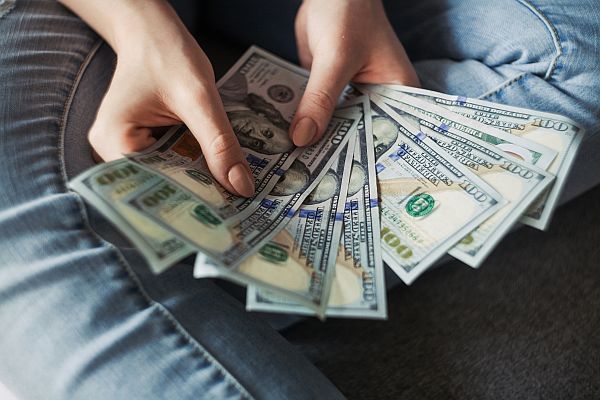
Part of what I have emphasized in all three editions of Travel Writing 2.0 and the accompanying course is the need to know what you’re earning per hour. If you know that, you can evaluate every possible use of your time during the workday through that lens. You can be on the lookout for ways to raise that hourly amount and look for ways to get rid of tasks that don’t support it.
If you can earn more per hour of work every day, every week, every month, then the problem of how you spend your time will probably take care of itself. There’s the “earning plenty of money” bucket and the “not worth it” bucket. You avoid that second bucket unless you’re doing it for pleasure, not work.
I’m not going to pretend that going from earning $15 per hour worked to $50 or more per hour is easy, but laying out the steps to get there is easy. Do these things I’ve learned from being a full-time content creator since 2006 and you’ll be on the path to higher earnings.
1) Define the goal, then know where you need to be this month, this quarter, and this year.
There’s a great saying that will give you regular guidance: “Ask yourself if what you’re doing today is getting you to where you want to be tomorrow.”
What are you really trying to accomplish in the long run? What will get you there — in real revenue terms, in real accomplishment terms? How will you know, in concrete and measurable terms, if you’ve made it? Is there a reasonable chance that if you take the right steps, you’ll get there?
If what you’re doing is not supporting those goals, then revamp your day, your week, your month. Do what will make a difference, not what is the most fun or the easiest.
To do this right, create the end goal and work backwards. Whether it’s to publish a book, get onto a premium ad network, close four direct ad/content deals for the year, or double your affiliate earnings, you can come up with steps that will get you there and map them out on a timeline.
2) Have two or three clear goals every day.
It’s okay to have a giant long to-do list that covers anything and everything you would like to get done this week. It’s easy to forget something if it’s not written down, so dump it out instead of tasking your brain to remember everything. But what’s on your “velvet rope to-do list”? What tasks will really move the needle and take you from also-ran to superstar?

When evaluating the tasks on your long list of chores, you’ll notice that they’re not all created equal. What will really bring in revenue or contribute to a major breakthrough? What will get you to where you want to be in the future?
Circle or star those things and don’t even look at the rest of the list until those are done. If you get two or three really impactful things done each day, I guarantee you that you will see progress in a month or two. If you treat every task equally, publishing a 2,500-word article at the same level as an unpaid Instagram story for instance, then you’re going to be spinning your wheels for a very long time.
Here’s another framework that’s from Tim Ferriss that’s another way of facing your to-do list. I’m paraphrasing, but it’s something like, “What’s the one thing on your list that, if accomplished, would make the rest of the list irrelevant?” There’s the one you tackle.
He has another great quote that’s “To make great things happen, you have to let a lot of little bad things happen.”
For example, your social media output may be thin. You make take a week to answer a non-urgent e-mail. You may have a few spam comments that you didn’t clean up for a week. Those little bad things won’t wreck your big plans though. Keep your eye on the big prize, not the insignificant chores.
3) Don’t answer any e-mail until you’ve accomplished something in the morning.
If I can point to one easy hack that has made the most difference in my productivity, this simple one is it. When you open up your e-mail, you are seeing what everyone else wants from you. Unless you are waiting for an urgent answer or payment details, it can all wait.
When you start answering those e-mails, other people have now hijacked your day and your priorities. Get something significant done first — a blog post, an invoice sent, an article written, an interview, a solid pitch — before you go down the rabbit hole of things that could easily wait.
The worst thing you can do in the morning is wake up and look at your phone’s email or social feeds. Give your brain time to wake up and then turn it toward something productive, not communications that are going to make you angry, frustrated, or unfocused.

I don’t have much of a morning routine besides making coffee, but some people walk, work out, stretch, meditate, or do something with the kids. Any of those are better than scrolling on your phone.
Your body has a finite amount of peak energy and concentration. Don’t blow either of them on other peoples’ problems. Get something important done when you do start the workday, then anything else you get done the whole rest of the day is a bonus.
If your day gets hijacked by someone else’s priorities after that and gets wrecked, you still took one step forward toward your goals. For sure you got one good thing accomplished before others’ priorities got ahead of your own.
(Unpopular opinion p.s. – You’re not allowed to whine about not getting enough sleep if you you lay down with your smartphone a foot from your face. Leave it in another room. Yes I’ve heard all the excuses, but most of them can be solved with another gadget or two, like an alarm clock, a book light, or a Kindle. Leave your second brain in another room while you rest your primary one.)
4) Batch your e-mail so it’s not bugging you constantly.
It’s not unusual for us to get 100, 200, or 300 e-mail messages per day. A lot of them are crap that you can instantly delete, but a lot of others will at least take 10 or 15 seconds of your attention to evaluate what to do with them. They’ll require at least a few minutes of your time to respond.
But e-mails are not texts: you don’t need to answer them right away! Ideally, take three or four times throughout the day to process your e-mails and reply to what needs a response. Or if that’s too tough for your lizard brain, check them once per hour. If you move back and forth between deep work and your inbox, that deep work is going to get compromised.
Sure, as freelancers and bloggers there are often opportunities coming through our inbox, so ignoring messages altogether is not an option. Dealing with them in batches, however, allows you to spend the rest of your day doing real work instead of responding to others’ needs.
E-mails are not texts from your family: they don’t require an immediate response.
5) Limit social media time and have a plan.
If you’re an Instagram superstar that gets paid to post pretty pictures or you make a few grand a month tweeting about laundry detergent, then you can skip this one. Otherwise, look at social media as a marketing channel, not a dose of crack you should be mainlining as soon as the endorphin buzz wears off from the last dose.
Take the addiction platforms in small doses and use them as tools, not necessities. First, turn off all those buzzing and pinging notification alerts they love to send you. Then give yourself a social media time budget, keeping in mind what you earn per hour and what it is costing you to be on Instagram for an hour instead of writing or pitching for an hour.
What are you trying to accomplish on social media? Do you even know? Or are you just spending time on some of them because you feel some kind of obligation?
Some platforms create blog traffic, others don’t. Some build a fan base, others are simply an ego boost. Some are great for networking, others are useless for that.
Overall, unless you’re getting paid to post on them, social media platforms are better as virtual water coolers than business builders, better for dopamine rushes than actual payoffs.

If you want eyeballs on your blog or articles instead of a platform you don’t own or control, then focus on content, SEO, and your newsletter lists instead. As we’ve all seen over and over again, the platforms we don’t control are going to screw us over eventually. We are the product (free content and data for them), not the customer. As we’ve seen with Facebook, Instagram, Twitter, and others, we will eventually be treated accordingly. It’s just a matter of when.
I know bloggers that have 100,000 social followers but get less than 10,000 visitors a month to their blog or YouTube channel. Don’t be one of those, especially if you want to control your own destiny.
6) Be consistent and have a schedule
When I work with students who are travel bloggers, one of the first things I ask is how often they’re putting up new posts and how often they’re updating old ones. More often than not, the answers are way too low.
When I work with freelance writers, I ask them how many articles they’re getting paid for in an average month and how many pitches they are sending out. More often than not, the answers are way too low.
If you don’t play the game, you can’t win the game. A great body of work doesn’t happen quickly. You need to show up and be a producer over and over again, week in and week out.
I probably average 10,ooo+ words of content each week across my various sites and that’s while managing freelancers, assistants, and partners. And promoting my books. And traveling. I used to have “raising a kid and taking her to school” in the mix as well.
If you only have one or two blogs and you’re struggling to get up more than two posts a month, you’ve really got to work on what’s holding you back. You’re either not working much, you’re doing too much of something, or you’re being a perfectionist.
If you’re a freelancer and you’re only sending out two or three pitches a week, how are you ever going to get into better publications or get more frequent assignments? You need to be sending 20 or 30 unless you’re getting a very high percentage of yes answers.
Come up with a schedule and stick with it. X number of posts each week/month, ___ number of pitches per ___. If you hit your goal every week or month, you will get more done and you will make more money over time.
7) Talk to people.

TBEX Europe group dinner
The allure of passive income is that you stick a bit of code on your blog and wait for the money to roll in. You’ll spend a lot of time waiting, however, and not a lot of time withdrawing money coming into your bank account.
If you want to earn real money as an artist of any kind, you need to sell your work. Or your influence. Or some service that people value. You can only accomplish this by pitching, proposing…and yes, selling.
E-mail pitches can work, but you’ll have far more success if you pick up the phone or go meet people in person. Everyone gets hundreds of e-mails a day now. Only a few people bother to show up and have a conversation.
You also need to get outside of your home office and meet people face to face. Go to conferences for writers and bloggers. Go to conferences that serve your niche. Go to meetups from Travel Massive or set up your own local group of travel writers to get together and swap ideas. You learn what successful people are doing right and you’ll have something to shoot for.
8) Celebrate the Wins

When you accomplish something, don’t immediately get bogged down in how much you have not done yet. Pop the bubbly, open that chocolate, or go reward yourself with some guiltless farting-off time for the rest of the day.
Whatever you do to reward yourself and feel good about the accomplishment, be sure to do that and pat yourself on the back. Sure, there’s plenty more to get to, but each milestone is important in a big project and each post, article, invoice, or trip planned is an accomplishment too. Don’t downplay the good things that are happening!
Once you’ve manifested something and actually made it happen, you know you can do it again. You’ve conjured up money or a project out of thin air, mostly using your brain and skills, and that is a big win!
About Author

Tim
Tim Leffel is the author of Travel Writing 2.0 as well as several other successful books. His work has been recognized by SATW, NATJA, and the Solas Awards. He has contributed to more than 50 publications as a freelancer and is the editor of four websites and blogs, including the "Best online travel magazine" and the popular Cheapest Destinations Blog, established in 2003. He served six years as Conference Director for TBEX and five years as co-chair of the NATJA Advisory board.
For #3, what are some examples of things you’ve knocked out over the past week before you looked at your e-mail? I’m torn because sometimes it does redirect my plans for the day, but on the other hand, sometimes it’s good news like an assignment or a payment notice that I see first thing and that starts the day on a positive note.
In the past two weeks: a blog draft or finishing one to hit “publish,” editing all the photos for an article, editing an article from a freelancer so it can be posted, entering my bank info in a form to get paid, sending two invoices first thing, editing a video for YouTube, editing an IG story and posting it for a brand obligation, editing two chapters of an e-book I’m trying to finish. All before e-mail and breakfast!
I can count on one hand the number of times this schedule has made me miss anything I maybe should have dealt with faster, like a press inquiry from an editor who is in Europe. It’s super rare and I’m more than willing to make that trade-off and miss the very occasional opportunity that was really urgent.