
Write for Humans Who Care, Not Machines That Can’t
Who are you really writing for when you compose a new article or update a new blog post? Do you know how to write for humans who care or are you writing for bot crawlers and algorithms that are just reading patterns and signals?

When I started out as a blogger in 2003, nobody knew what a search algorithm was and most of the places we can get noticed now didn’t exist. So we wrote for people who cared about the same things we did. Since there was no social media and bandwidth wasn’t good enough for streaming, we hoped some of them liked us enough to link to us, talk about us in the media, sign up for our newsletter, or add us to their RSS feeder. (RIP on that last one, sniff sniff, purposely killed off by Google.)
Now that I’m one of the last OG bloggers from that era still standing, with two of my sites more than 20 years old, I find it deliciously ironic that the SEO consultants are now telling us to “Stop writing for Google and think about the reader.” I’ve been thinking about the reader non-stop since 2003, thank you very much.
Google has never been my boss and I only occasionally tried to game their system with software tools. Mostly I just did that by going after low-competition keyword phrases in my niche that I knew I could dominate. That’s probably why I kept most of my traffic across five websites through all these algorithm changes. I was never writing for the masses.
The people who cared kept coming back and I had a mix of traffic sources. I also had almost zero generic listicles on my sites that an AI bot could steal from and copy train their system on.
I doubt we’ll ever get back to the easy money “good ole days” for some where you could get good at gaming the search system and make enough cash to live on just from display ad income. The bots can crank out the general interest crap and simple answers at scale now, so you need to be better than that.
You need to be experienced, curious, unique, and even opinionated. In other words, the traditional attributes of a good travel writer.
If you’re not sure what it really means to be writing for real people instead of giving the boss of the internet what it wants — which is constantly changing by the way — then here are a few points to honestly test yourself on. If you’re failing on more than one of them or having trouble even answering, it’s probably time to pivot and adapt.
Who is This Body of Work Really For?
Who do you serve specifically? These strangers who are reading your blog or online magazine, what do they really care about? What are their pain points, their fears, their desires, their wishes? What problem are you solving for them or what are you delivering to them that nobody else can?
You need to be publishing the kind of blog that people would miss if it went away. It needs personality, a point of view, a clear direction, and a purpose. It needs to be for a certain kind of person. You should also know who doesn’t belong and feel free to tell them to buzz off.
If you’ve got a big general-interest travel blog that’s about everything and everywhere then sorry, split that puppy up tomorrow. If you’re not focused these days, you’re dead. Even the biggest media sites are struggling hard trying to be everything to everyone and many of them are bleeding red ink. You need a tribe of people who care about what you’re doing and that means being very clear about who you are trying to serve.

This is great time to be the only blogger covering multi-day treks around the world. Or the only one covering luxury travel in Latin America only. Or the only one covering food at Disney Parks in detail, established 2009. Or the best blog about one specific city.
This is a terrible time to run a blog called Susie Goes Traveling that has 300 generic articles about what to do in 58 random countries. If you’re going to do a worldwide blog, you’d better find some very specific angles along the way that nobody else has covered. (Check out the Perceptive Travel blog to see how that works — especially the top 10 posts by traffic in the sidebar of each individual story.)
One good gut check, if it’s not a paid campaign post or sponsored one, is to ask yourself this: “Will this article be genuinely useful to the kind of reader this blog is targeted to?” If it’s just one you’re putting up because of what came out of SEO research instead, then probably not.
How Many of Your Readers Know You and Remember You?
Google search traffic is great for earning display ad income and affiliate income, but if you don’t hook those readers the one time they read that one article, they’re like convenience store customers buying a Diet Coke. They’re not coming back because they loved the store. They’re moving on.
If your search traffic is resulting from articles around your area of expertise, then it’s more like a “top of the funnel” experience for that reader. They see that you know what you’re talking about and hey, they’re interested in that subject overall, so maybe they’ll want to read some more articles. Maybe they click on a related post, an internal link, or a tag that clusters similar hyper-specific posts.
If you appear in the media, on podcasts, or on stage somewhere, even better. All those “in real life” appearances will help you stand out and be memorable.
It’s nice if a visitor clicks on one of your social media buttons and follows you, but what you really want is for them to sign up for your newsletter. You don’t own your list on Instagram or TikTok, but you do own your e-mail list and you can actually reach all of those people anytime you want, not the 2% of them that some third-party algorithm allows. And they will actually click on links.

Once people remember you and give you permission to stay in touch with them, now you’ve move from random visitors to real fans. One fan is worth 1,000 random visitors because…
How Many of Your Readers Trust You Enough to Buy Something?
Here’s the real test that makes a lot of bloggers squirm. Do your readers care enough and trust you enough to open their wallet and spend money with you?
Will they buy your book, buy your product, join your tour, or pay you for consulting? Because if not, you probably don’t have anything close to 1,000 true fans yet. You have a bunch of randos stopping by to get a question answered (in other words, that Diet Coke from the random convenience store).
Sure, I love passive income as much as anyone and I make a serious chunk of change from Mediavine and from affiliate bookings — many of those visitors being first-time visitors probably. But the percentages are much higher when someone buys my books, comes on a tour with me, or pays me an hourly rate to help solve their problems. Those higher-value income sources only come from building trust, familiarity, and a rapport.
How Many of Your Articles Are Unique and Based on Real Experience?
What percentage of your articles are general listicles? Which ones could be written by almost anyone? Or cranked out by Claude?
One of the good things that came out of the Google HCU update in 2023 was that it got rid of the tendency for 100 travel bloggers to write almost identical articles going after high-volume queries. The first page of search results for “Things to do in Amsterdam” would be 10 very similar articles where the only differentiating features where the order of the words and what number they stuck in the listicle. The higher the number and the longer the article, the thinking went, the better chance you had of ranking high.
All that blew up after Google changed its system and the bloggers that had built their whole site around that kind of output were the ones that were most likely to get decimated. It was kind of a good riddance moment for our industry.
Sure, there was plenty of “baby with the bathwater” damage along with it that Google has been trying to correct ever since, with some decent success the past year, but those sites that were nothing but generic listicles about places they hadn’t even visited have not recovered. And probably never will.
Those articles weren’t doing anyone any good really. No real reader needs an article called “87 Fantastic Things to Do in Rome,” so tell me about your one immersive experience that was truly memorable and forget the other 86. Like this:
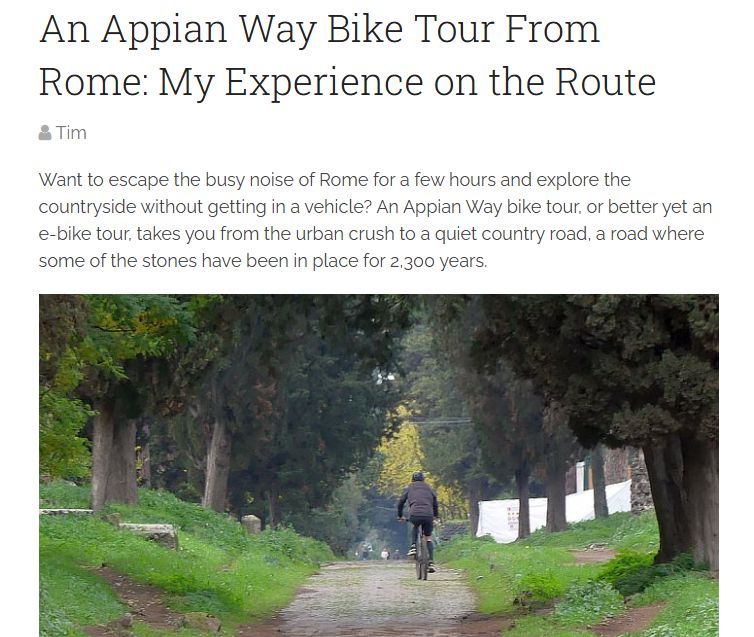
Thankfully, that’s what’s working well again, just as it worked well 20 years ago. Readers and search engines are aligned again: both want your expertise, personal experience, emotions, sensory experiences, original photos, and real opinions.
Tell us the things an AI bot can’t tell us and do the things a bot can’t do. That shouldn’t be hard since an AI bot can’t hear, smell, travel, or feel something with its fingers. (Heck, it can’t even really read, only recognize word patterns which is why one will hallucinate so much and write so badly.)
How Many of Your Readers Communicate With You?
One of the main reasons to send out a newsletter regularly is that you can talk to readers in a human voice, one that’s not polished for publication, and get immediate feedback. You can prompt them to hit reply, you can run a survey, or you can run a poll. You can send them to your latest article or video and ask, “What did you think?” Many will tell you.
Based on 23 years of experience, I’m also a big advocate of leaving comments enabled on your blog. The excuses for not doing this are mostly b.s. I spend an average of two minutes a week getting rid of spam comments. It’s nothing. Akismet catches all the rest.
The comments I do get are often pure gold though and many a popular blog post that’s made me hundreds of dollars in display ad income sprouted out of a reader question or pain point. Readers will also be de facto proofreaders if you let them, correcting your factual mistakes.
You also need to monitor your social media comments and your YouTube comments. Sure, many comments are mean or useless, but plenty bring up legit questions or concerns. If three people ask the same thing across various platforms, you can be sure than three hundred other readers are wondering the same thing but hadn’t bothered to ask. Write a post with an answer or solution and it’s almost sure to resonate.
Are You Excited and Proud About Your Output?
Sure, there are basic steps you need to take so search crawlers can understand what you’re talking about. They do send most bloggers at least half their traffic, after all, so you need proper article structure with headings, an article that knows how to get to the point, and a site that doesn’t take 10 seconds to load. But SEO is far less complicated than most people think — or course creators would like you to believe. If you write for humans who care about a specific subject in depth, the SEO success is usually a natural byproduct you don’t have to sweat too much.
Half the reason I never went down the gaming Google angle though, just putting out bland listicles, is that I found the whole thought of it way too soul-sucking. If I wanted to get up each day and grind out work I wasn’t excited about, I would have stayed in the corporate world and gotten a steady paycheck and better health insurance.
Instead I kept writing about what interested me. And what I was excited about. What my readers cared about.
Now my traffic is higher than it was before AI and the HCU came along and I don’t think it’s just luck. Humans may go to AI for quick answers, but they want advice from real experts when there’s subtlety and depth. They want to read about real experiences that other travelers took — with honest opinions about the pros and cons.
Now that a lot of bloggers gave up, the ones who are left who care deeply about what they cover are often doing quite well.

Do the work that makes you smile
If you’re excited about what you’re working on, that’s going to shine through and get other people with similar interests get excited too. If you’re sincere about solving problems and helping people save money or travel better, that’s going to attract an audience. Importantly though, you’ll be doing work you enjoy and are proud of, not doing work that only a search crawler bot could love.
You know what’s a good test? Writing a whole draft without getting distracted or drifting off to do something else. I wrote this 1,800-word piece in one sitting. Because it’s a subject I care about. Hope you found it useful fellow human.
Want more tips on being a successful travel writer or blogger who is paying the bills with this pursuit? Join 1,000 others on the monthly Travel Writing Success newsletter. And leave a comment below on what you thought!
About Author

Tim
Tim Leffel is the author of Travel Writing 2.0 as well as several other successful books. His work has been recognized by SATW, NATJA, and the Solas Awards. He has contributed to more than 50 publications as a freelancer and is the editor of four websites and blogs, including the "Best online travel magazine" and the popular Cheapest Destinations Blog, established in 2003. He served six years as Conference Director for TBEX and five years as co-chair of the NATJA Advisory board.
Great article, Tim. I write about what I find interesting and since I write for an audience very much like myself (and not bots), I know they’re going to love it, too. Nothing makes me happier than to hear that someone planned a trip based on an article I wrote– one gentleman had his honeymoon in Sicily because my stories made him curious enough to want to go. Thanks for an important reminder that we write for other humans!
Yes, keep that as your North Star and the search success will usually follow, especially if you’re not trying to write the articles that have been written 1,000 times already (and can be regurgitated now by AI as a result).