
An Interview With Robin Esrock, Travel Journalist
 Robin Esrock is a best-selling author and award-winning travel journalist who specializes in bucket lists. He’s a renowned travel personality who is an international TV host and a public speaker.
It seems fitting that he covers the world’s most exceptional destinations and activities since we met on a small-ship cruise that traveled down the Pacific coast of South America. There we conducted this interview with his stories about catching a break and then making more breaks happen.
Take us all the way back. Where did you grow up and go to school and what business were you in before travel?
I was born and raised in Johannesburg, South Africa. I always loved reading and words. In high school, oddly enough, I excelled in English, geography, and history, which seemed to suggest something. I then went on to get a journalism degree and many people right away will connect the dots. Eventually I became a travel journalist, but first I got into web development for media companies in the very early days of the Internet. For several years I worked for the biggest media company in South Africa. I put a whole bunch of magazines and newspapers online.
Then I went to London and I worked for the BBC, Reuters, Channel 4, and the Sunday Times. I hated it though because it wasn’t creative it all. It was factory line working. I immigrated to Vancouver, Canada in 1999, still in my 20s. I wanted to pursue my passion, which was music. So I started a record label. That ended up being a back door into working for the country’s largest music agency, where I worked for five years in the early 2000s: artist development, PR, corporate communications, early days digital marketing. I worked with a lot of acts that were successful (Norah Jones, Elvis Costello, Coldplay, Avril Lavigne) but that quickly lost its glamor too. It was fun at first and then it became very grueling and very soul-crushing
What instigated the next change in your life?
I decided there were three keys to happiness: find something to do, someone to love, and something to look forward to. I did not love what I was doing at all. I had broken up with my long-term girlfriend at the time and I didn’t know what I was going to go next. And a car ran me down on the way to work. I broke my kneecap in the accident. I was riding a scooter that was just totaled.
It turned out that was the best thing that ever happened to me. It was a very big wake-up call—to reevaluate what I wanted to achieve in life, where I wanted to go and what I wanted to do. I received a $20,000 insurance settlement. It wasn’t $2,000,000. It wasn’t even $200,000. This is 20 grand Canadian, but life-changing money doesn’t necessarily have to have a lot of zeros, especially when you’re not making much to begin with.
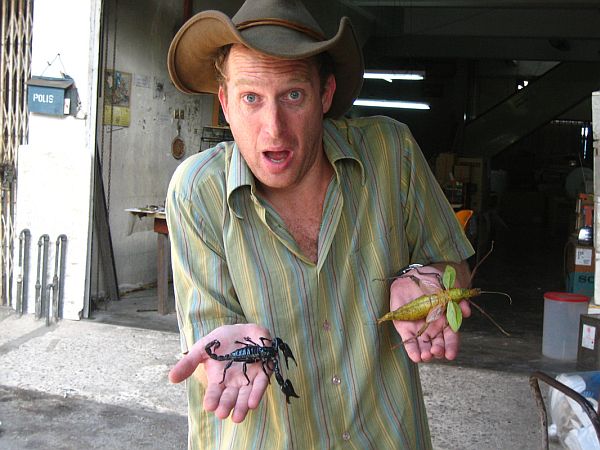
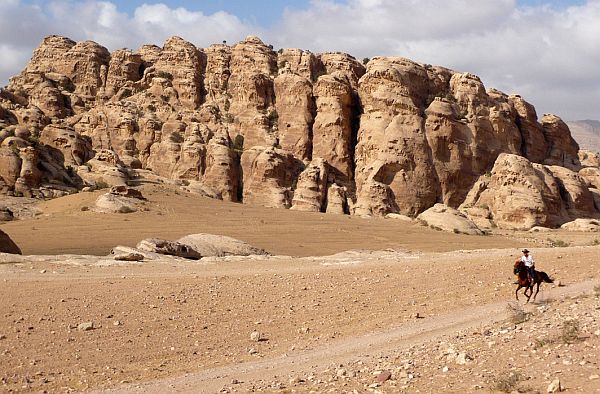
I cashed that check, sold everything I had, and went traveling for a year on an around-the-world trip. At the time, there were a lot of amazing deals in airline travel for that kind of journey and I went to 24 countries on five continents. I started writing about everything that happened to me.
What was your first break in terms of actually getting paid for writing something?
I decided to put a travel diary online because I had a friend who used to keep a journal, and I wanted to keep a journal. I wanted to remember everything about this year. But the friend’s journal was stolen after years of travel and it just destroyed the poor guy and I thought, “I’ll just build a website.” There was no WordPress back then I don’t think, but I could manually do it and just put everything on a website and not only is it backed up and safe, but everyone can follow me if they want to, my friends and family at least.
I was sitting at the beach a couple of weeks before I left and I was talking to a friend and he said, “Why don’t you pitch to newspapers? If you’re going to be writing anyway, why not?” I used to send out these long, hilarious emails about what was going on in my life, like a blog before its time, so he knew I could write something entertaining.
I emailed the travel editor of the Vancouver Sun and said, “I got 20 grand from an accident payment. I’m going traveling around the world. I’m going to be writing about it or an online diary. Maybe you’d be interested?”
Every star had lined up and the editor emailed back that same day and said, “This is great. Would you like to write a column?” Even then that was a rare thing to happen. So I had steady work already when I took off. I think it started as every two weeks and then it ended up every week. And it was still in the days when newspapers had a big pool of readers. When the first column ran I got 75 emails from strangers wishing me luck. Still to this day I’ve never written something that’s got that kind of response.
What was it like filing regular columns from abroad in the early days of the internet?
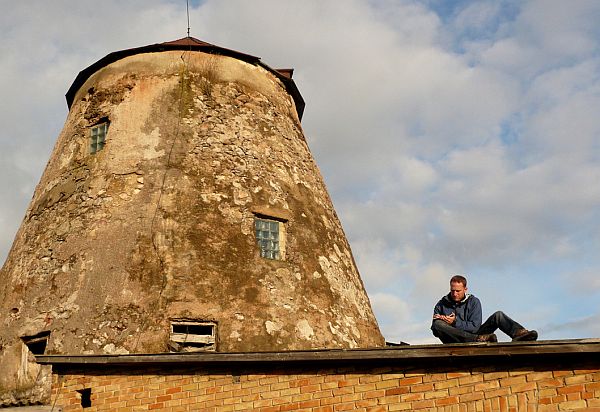
I had to find an internet café when it was time to send my dispatch and hope that the connection worked, that the power didn’t go off halfway. I remember sitting there waiting for a high-res image to load, back then that was only 3 MB. It was my boot camp in travel writing.
I was moving fast and I was doing a ton of stuff in each country. I discovered that my body could take a lot of punishment so I could just keep hitting it and I could hustle hard. And then, one day a week, it was usually Friday. I said, “OK, I’m not going to go to a beach. I’m not going to go to a museum. I’m going to find an internet cafe. I’m gonna sit there until I’m done—which was eight hours sometimes. The column was usually between 3,000 and 8000 words and then I would take all the photos I shot that week and I would condense them into about 30 of the best ones and I’d caption them.
Every person that I would meet I would interview them, take their picture, and include that. Every place I stayed at, every place I ate at I reviewed. It was brutal. The last thing you want to do when you got two days in a beautiful place is to sit in front of a computer indoors, but that’s our life sometimes.
It became like a holy mission every week to finish this document. Because I fully expected to come home and that would be it. And then I would say, “Look at this year of living abroad doing this amazing journey!”
But you eventually parlayed that into other assignments, right?
It was about halfway through that trip, I thought, “Well if one newspaper will publish me, maybe others will.” So I just started emailing. I added another hour to the workday so it was nine hours. In the last hour, it would just be “Dear travel editor. My name is Robin. This is what I’m doing. Would you be interested in new travel stories about…?”
Eventually I got responses and I think the first one I picked up was the Chicago Tribune. Then I got the Dallas Morning News, the South China Morning Post, and the Sydney Morning Herald. I just started racking up some good credits. It sounds easy but there was probably about a 99.5% rejection rate. It was just persistence, week after week. I guess they just got tired of me asking and gave in.
Returning home after a year abroad is even tougher than the travel. What happened next?
I wasn’t making a living by any means, but I was published enough to make me think, “Maybe this is a thing, maybe I could do this.” Right away the travel agency that I booked my flight with asked. me if I could do a talk. I was used to my friends and family having a 45-second attention span when I talked about my trip, so I was kind of surprised that they asked. I think they gave me 200 bucks and I put together a slide deck and I thought almost nobody would come to this thing. But the capacity of the room was something like 100 and then 250 people showed up.
Apparently I hit some nerve just as the word “blogging” was entering the scene and my talk appealed to travel dreamers who wanted to “get off the beaten path” and all that. So then they paid me to go do a national speaking tour. And then they said, “Do you want to go do the Trans Siberian Railway? We’ve got this package…” I replied that it sounded cool, but I couldn’t afford it. “No, they replied, we’ll pay your way.”
That started a long relationship. Off I went to China, to Mongolia, to Central America for I think eight weeks. Then the Malaysian Tourism Board reached out to me and said, “Hey, do you want to come to Malaysia?” I was just learning about travel media, I wasn’t part of any organizations.
I had a strange life by this point, sleeping on couches, house-sitting, doing odd jobs to make ends meet, then suddenly staying in a luxury resort because I’m on a writing assignment.
Most people know you now as a TV personality since your show ran for years in multiple countries. How did that get rolling?

At some point I literally Googled, “How do you get a TV show?” and found some good tips and steps. Then I started pitching. I was in touch with another travel writer I had met on that year abroad in Turkey. She was writing for the Toronto paper and I was writing for the Vancouver one. After a bunch of pitches, a big production company signed us. The timing was good: YouTube had just come out and I’d stitched together a whole bunch of video clips, just things I couldn’t capture with the photos I took. That turned out to be a good demo. The broadcast network thought my original concept was too ambitious and said, “What about just you and this Julia Diamond woman? Why don’t you two just travel around the world and be travel writers on camera?”
That turned into Word Travels on the OLN Network. They renewed it a few times after it did well and we aired 40 episodes. We went to Venezuela, Ethiopia, Lithuania, lots of unusual countries. NatGeo TV ran it, the Travel Channel picked it up and dubbed us into 21 languages. So I’ve seen myself on TV in languages I couldn’t understand, in a different voice entirely. It got picked up later by a few streaming services, so it’s still on TV here and there internationally.
Julia and I had very different ways of traveling, so the audience was kind of split on who they identified with. It would be a very different show in today’s reality TV times. They would have highlighted the tension more and tried to get us to fight about everything. What I really like is that there’s a lot of good music running through it. Lots of indie bands that I had worked with. You watch it today and it almost plays out like a 30-minute music video. It wasn’t easy though: We shot nine episodes in eight countries on five continents in just nine weeks once. Without a break and with no days off.
Were you still writing at the same time?
I was still pitching and writing some as well. Julia was writing a column and doing some freelance work so we made that part of the show. It was authentic in that sense.
What opportunities came your way after the show ended its run?
After we wrapped up the show, I had so much content that I’d written, so many stories that hadn’t found a home, so that evolved into a weekly column for the Globe and Mail, where a lot of those stories ended up eventually. This idea of the bucket list started to take shape, because effectively that’s what I was doing. I was looking at all these things I wanted to that would be on my bucket list in each country and they had to be unique. It dovetails very well with travel writing, where you can’t tell the story that an editor has seen or heard 1,000 times already, it has to be something different.
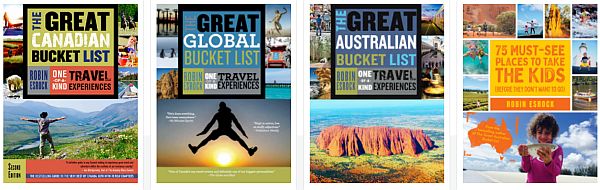
So I did that for a year and one of those columns was about Canada. It was for Canada Day and they asked me if I could write something for Canada. I hadn’t traveled much in Canada at all, even though I’d become Canadian. So I wondered what would be on my Canadian bucket list and what will be included for a column. Because of that writing, the same publisher behind 1,000 Places to See Before You Die approached me about expanding the Canada bucket list into a book.
This was 2013 and I said, “Are you out of your mind to write a guidebook that tries to compete with TripAdvisor and Yelp? And Google and Expedia? The information is all out there already. I’m more interested in why these places are so special as opposed to how to go there.” So I pitched that and said, “What if I actually go to every one of these places and do all these things? Focus on the emotion and the people and the history and the trivia and the why as opposed to the how?”
Surprisingly they went for it and said, “Well, you’re already in Canada. Here’s your advance.”
That advance wouldn’t have even covered travel in the next province over, however, so I started hustling. I approached sponsors and partners to get it all funded, then spent 2-1/2 years traveling across Canada back and forth in every season. The book is called The Great Canadian Bucket List, and it’s been the number one selling travel book in Canada for almost 10 years, with a second edition replacing the first. They actually split it up into regional editions as well, some doing very well.
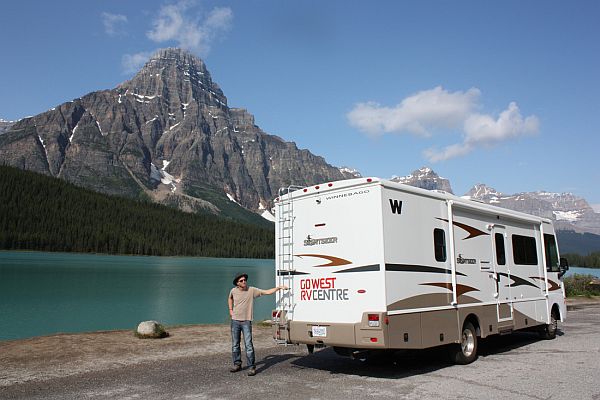
To make it work, I put all the “how” on a companion digital site: CanadianBucketList.com. Once you got inspired, you could go to the website and then see how to actually make it happen, including the companies I worked with. I still update the blog every month. That’s become its own thing.
How do you monetize that site?
Just Google Adsense ads. I’ve tried experiments with a few different kinds of affiliate partners and I’ve never really been able to make it work. Same thing with social media. There’s a Facebook page with 72,000 likes or something. But I don’t mind it the way I probably should. I never thought of myself as an “influencer.” It’s never been my primary focus and once travel went online and media just blew up, it got a lot harder to stand out. I was one of the first travel YouTubers. Then kids came out with steadicams and filters and drones and professional editing software and quantity started overriding originality. You have to deliver and produce so much content constantly. I’m a storyteller. I’m going to focus on being a storyteller and what I’m good at and what I enjoy.
I do have to say that 15 years of writing for newspapers has impacted my writing, not for the better. Which is why I love the books so much. I have free reign and can tell better stories. My first year of writing was filled with humor, descriptive metaphors, and emotional tales from people I met but it’s really hard to publish that work. In some ways, travel writing was more interesting before social media, Google, and smartphones, back when I had a paper flight ticket I couldn’t lose and I’d go for days without finding an ATM. There wasn’t as much content out there then because travel and communication were both much harder. We didn’t have overtourism that came from people chasing the same selfie spots.
Since you’re a bucket list specialist, any places that you tell people to avoid, ones that don’t live up to the hype?
Bali for sure. It’s a beautiful part of the world but the traffic is awful and there’s garbage everywhere. We spent five weeks there. The Four Seasons had their little stretch that they would comb so we would walk along the beach and it would be garbage, garbage, garbage, clear spot in front of the Four Seasons, garbage, garbage, garbage. The water was full of plastic rolling in with the waves.
The culture has shifted so radically in Bali that you really have to work hard to find an authentic connection with anyone now. We lived in a local neighborhood and found our ladies who cooked for us that were amazing. But everywhere else it was just scam after scam after scam and the beaches were filthy. I imagine that 30 years ago it must have been paradise. There’s a reason why it has this reputation, but today I would not recommend Bali to anyone.
Cuba is another country I have a real hard time recommending to anyone. The tourist economy and the local economy are so divorced from each other. An American journalist living in Havana, married to a Cuban, showed me the real world of Havana. I could not believe the level of control and the repressive nature of it, with no access to truthful information. It was unbelievable what people would do for a dollar because the value was worth so much more than the peso. I can’t recommend Cuba until there’s a real regime change.
I tell everybody, “Keep your expectations low. Then you always be pleasantly surprised.”
See more at Robinesrock.com and CanadianBucketList.com. You can also find Robin Esrock on Twitter and Instagram. See his debut story in my Perceptive Travel online magazine here: Lamborghini vs Ferrari.
About Author

Tim
Tim Leffel is the author of Travel Writing 2.0 as well as several other successful books. His work has been recognized by SATW, NATJA, and the Solas Awards. He has contributed to more than 50 publications as a freelancer and is the editor of four websites and blogs, including the "Best online travel magazine" and the popular Cheapest Destinations Blog, established in 2003. He served six years as Conference Director for TBEX and five years as co-chair of the NATJA Advisory board.