
Jason Frye: Carolinas Specialist, Author, and Freelancer
Jason Frye is a veteran travel and food writer that we first interviewed on this travel writing blog almost a decade ago. He is the author of several Moon Travel Guides, including Moon North Carolina, Moon Great Smoky Mountains National Park, Moon Blue Ridge Parkway Road Trip, and the forthcoming Moon USA National Parks Hiking. Based in Wilmington, North Carolina, he has written widely about the state’s culture, food, and outdoors. With an MFA in Creative Writing, Jason brings a storyteller’s eye to every journey.
Let’s start with now. You’ve got a new Moon handbook coming out a month after this interview goes up then three more on the way within six months. What’s it really like being a guidebook author and how big of a part of your income is it?
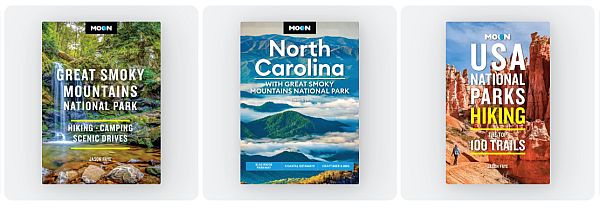
My newest travel guide, Moon USA National Parks Hiking, comes out in mid-October of 2025, and I am beyond thrilled about this one. As an Eagle Scout, an “outdoor kid,” an avid hiker and an advocate for our National Parks, this one is close to my heart. It was a bear to plan, research, and write, though. My editor and I put a lot of thought into how we make the book inclusive to hikers of all ability and experience levels, how we spread out the hikes and recommended hiking seasons, and how we treated the text.
As I was wrapping that book, I started work on a new edition of Moon Great Smoky Mountains National Park; fortunately, I’d just done some of the hiking research, so it was an easier lift. While I was wrapping the Smokies guide, I was reviewing page proofs of National Parks Hiking and starting the research for the eighth edition of Moon North Carolina.
Luckily, my books share some content. My publisher creates two other books from the NC guide, turning the first chapters into Moon North Carolina Coast, and melding a few mountain chapters to make Moon Asheville and Smoky Mountains. Moon North Carolina feeds both NC Coast and Asheville; Great Smoky Mountains National Park figures into Moon North Carolina and Moon Blue Ridge Parkway Road Trip, and by the time I’ve wrapped Smokies and NC, I’ve written nearly half of the Blue Ridge Parkway title. (I just went under contract for the next edition of that, so look for it in late 2026). That said, I work to make each title distinct and ensure that all my information and recommendations are up to date.
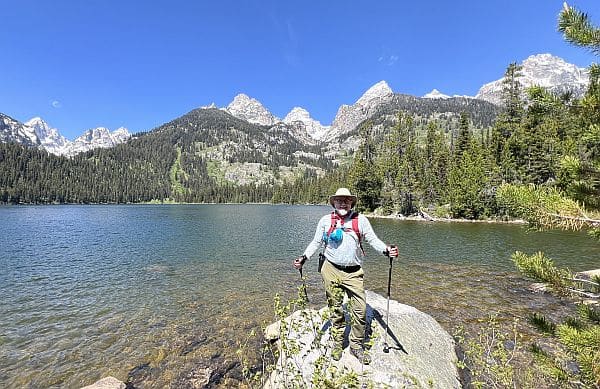
You can see I keep a busy schedule between field research and writing for the guidebooks, but like any good freelancer, nothing is single-use/single-purpose and I roll my research into pitches for AAA, Our State magazine, the TV show where I work as an Associate Producer and Segment Host, and for other online and print outlets.
Over the years, the guidebooks have become a more significant portion of my income, reflecting both the number of titles I have on shelves and the fact that North Carolina is the fifth most visited state.
I’d imagine there’s a lot of project management work juggling so many books at once, along with articles work. Any productivity advice for writers who get overwhelmed easily?
I think my fourth-grade teacher – who wrote “messy desk” on every report card – would be shocked of how far I’ve come. The desk is still a little messy but I don’t miss a deadline.
You need a good calendar (I use Apple’s native calendar app) and a realistic view of your work habits. When I get an assignment, I put the due date on the calendar and request a couple of alerts. Then I back things out. Like I know it’ll take three days to write, edit and polish this one; I need a week to work on that one; and put in my working/writing deadlines. After that, I put any interviews or site visits on the calendar. You should tailor this to fit your work habits and writing style.
As for getting overwhelmed, recognize that sometimes things are overwhelming and don’t let that pull you under. Instead, focus on the task. Try to embrace a new mindset particular to the project.
For me, the big projects are books and huge content projects (like the 25,000 word online guide I wrote for the Outer Banks), which, from a distance, look like tidal waves. With each project I forget the end product and focus on the smaller elements. I’m not writing a book, I’m writing a chapter. I’m not writing a chapter, I’m writing about a city. I’m not writing about a city, I’m writing about the restaurants there.
When I break it down into smaller tasks, I find I suddenly have work that’s achievable, doable, manageable, and I can build momentum from completing these smaller pieces. One day I look up and I’ve written three chapters and one third of the book is done.
How did you get started as a travel writer and how has the job changed for you over the years?
I got started because the freelance grind of saying “yes” to every story and writing dozens of pieces about the new chiropractor, the realtor of the year, and some expanding dental practice was a drag. It didn’t scratch my storytelling itch or get me excited to write tomorrow. So I pitched a local magazine: a beach guide for their summer issue. That story took an embarrassingly long time to write, and reading it now makes me cringe, but it set the hook: writing can be fun and satisfying and pay the bills.
The story was a hit, so I pitched some more things I was interested in, like kayaking on the blackwater creeks near my home in southeastern North Carolina, and a brewery. Instead of interviews, I joined a kayaking guide on an excursion and I helped the brewer pitch in some hops before we sat down to taste his beer.
Over the course of a nearly-20-year career, things have changed considerably. For starters, the pay is different, with no more dime-a-word work for me. I’m now earning between $0.75 and $1.50 a word for magazine work – and the work sates my curiosity and has me excited to write. Secondly, work finds me; once you’ve landed a few noticeable bylines or you have a few books to your name, editors will find you with assignments or will ask you to pitch them.
Third, work has expanded to include writing for tourism destinations large and small. I write for Visit Wilmington in my hometown and the South Carolina Upcountry, but I also write for the North Carolina and West Virginia Departments of Tourism. I have editing and ghostwriting clients, I’m teaching writing classes, giving talks and seminars, and even writing newsletters and corporate communications.
Fourth, unexpected opportunities have found me; for example, I’m an Associate Producer on North Carolina Weekend, a PBS program exploring the best things to do, eat, see, and experience across the state.
This didn’t all happen at once, though. After writing those initial travel stories, I kept writing for that outlet, expanded to another local magazine, then another, then I finally landed a story in Our State, a prestigious magazine all about North Carolina. Eventually the path led me to Moon. I saw they wanted someone to write the second edition of Moon North Carolina, so I applied and landed the job. It was the biggest project I’d taken on and it was quite intimidating, but the book sold and Moon asked for another edition, then another title, then more editions.
Now I have a bookshelf full of travel guides with my name on the cover. It’s pretty cool for a kid who always said he wanted to be a writer when he grew up.
You’ve been involved with SATW as a member for quite a while. What have you gained from that organization or any other you’ve belonged to?
I’m a proud member of SATW, and in 2025 I hit a major milestone: 10 years as a member. But they’re not the only professional organization I belong to. I’m also part of the OWAA (Outdoor Writers Association of America), ASJA (American Society of Journalists and Authors), and the North Carolina Writers’ Network.
They all serve different purposes in my writing life, and each offers different benefits to members. They all have one thing in common, though: community.
In SATW I have a community of fellow travel writers and content producers. OWAA gives me perspectives deeply tied to nature and outdoor adventure. ASJA surrounds me with fiction and nonfiction authors, magazine writers, and folks whose writing careers led them to interesting niches. The North Carolina Writers’ Network helps me stay close to my MFA roots with members working in fiction, nonfiction, poetry and more from across the state.
Writers often ask me about the value of organizations like these and I tell them the truth: they’re incredibly valuable or they’re not, and that depends on you. I’ve found that you get out of a group what you put into it, so get involved. Soon after I joined SATW, I jumped into leadership, first in the Eastern Chapter, then on the Board of Directors, and now on the Executive Committee as SATW Membership Officer.
I’ve also helped plan our chapter meetings and networking events, coordinate the professional development offerings at our annual conventions, help organize webinars and other remote opportunities, and now I’ll be co-chairing (along with my wife, Lauren Frye, PR pro extraordinaire) SATW’s 2026 Annual Convention in Haywood County, NC.
Every time I get involved, whether it’s as an organizer or an on-site helper, I meet new members and make valuable connections.

What do your income streams look like these days as a content creator?
The lion’s share of my income is guidebook related, with some 40-45% of my income deriving from book sales. Regular magazine gigs make up the next largest piece of the money puzzle, with new outlets coming in third. My work as an Associate Producer and the work I perform as a developmental editor (helping novelists refine their plots, characters, dialogue, and descriptions) are about equal. Work as a newsletter writer and other bits of writing round it out. I’ve only dabbled in true influencer work or digital-only content creation, so there’s no steady income stream for me in that area (yet).
I expect the guidebook portion to go up with the addition of Moon USA National Parks Hiking. Moon’s National Parks series has been a great seller for Hachette (my publisher and the parent company to Moon) and National Parks Hiking is one of the centerpieces for their fall and spring marketing. With the publisher’s excitement and the broad international reach (thanks to the appeal of our National Parks), I’m hopeful that next time we chat, I can say guidebooks make up 60% or more of my income.
How has specializing in a certain region helped your career?
In a word: immensely.
By pointing my writing career toward North Carolina, I’ve become a subject matter expert and an authority on the state, and that opens so many doors. Pitches that I send to editors carry more weight because I’m “the guy” when it comes to North Carolina. Editors seek me out with assignments, photo editors reach out to see if I can help with scouting a shoot, media opportunities appear in my inbox. I’m invited to judge at food festivals, barbecue competitions, cocktail contests, and more. Restaurants, chefs, breweries, and the PR folks seek me for media previews and to hear my frank opinions.

A few years ago I was on the Blue Ridge Parkway on a personal getaway and my Instagram posts caught the attention of an editor at Southern Living who reached out to see if I’d be interested in writing a Parkway piece for them. After Hurricane Helene ravaged Western North Carolina in 2024, The Points Guy contacted me for a reported piece about recovery efforts, the state of things, and the reopening of a lauded hotel. More recently, Southbound and Atlanta Magazine reached out with assignments focused on North Carolina.
The same holds true for hiking and our National Parks, and that book isn’t even on shelves yet. I’ve already received inquires to see if I’d like to appear on a few podcasts, if I’m available for an interview, and, most importantly, if I’d like to write a few pieces about hiking, the outdoors, and our National Parks.
For writers who question if they should dig in and become experts on a subject or a place, I say yes. Become the boutique hotel maven, the Oregon expert, the specialist on Georgia. Develop a reputation as an authority on Chicago, immigrant food culture, or kayaking Florida’s crystal rivers. Editors and readers want an expert opinion and an authoritative voice to quote, so become that expert and that authority and opportunities will find you.
What big adventure is at the top of your personal wish list?
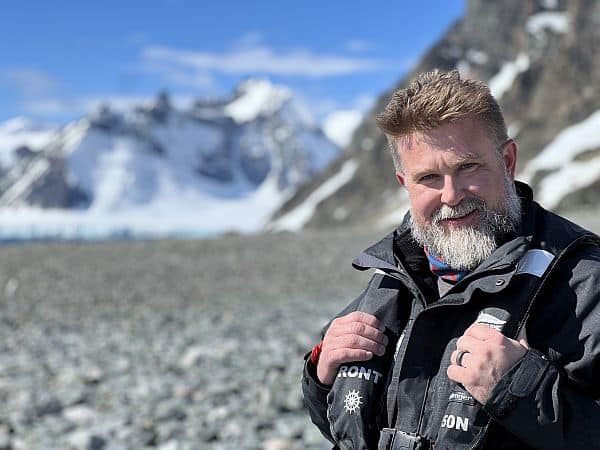
There are two. Australia and Africa. I went to Antarctica (and did my polar plunge south of the Antarctic Circle) a couple of years ago, so now I need to visit Australia to hit all seven continents (plus the food, wine, and people of Australia are amazing). And my trip to Africa consisted of Egypt, so I’d like to see West Africa and the Sahara and experience a safari.
Of course that leaves plenty of mountains to climb, National Parks to visit, and trails to trek, so I’ve got a bit more exploring to do.
About Author

Tim
Tim Leffel is the author of Travel Writing 2.0 as well as several other successful books. His work has been recognized by SATW, NATJA, and the Solas Awards. He has contributed to more than 50 publications as a freelancer and is the editor of four websites and blogs, including the "Best online travel magazine" and the popular Cheapest Destinations Blog, established in 2003. He served six years as Conference Director for TBEX and five years as co-chair of the NATJA Advisory board.