
A Conversation with Marco Ferrarese, Author and Travel Writer
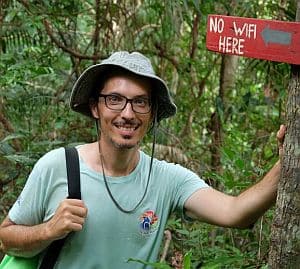 Did you hear the one about the Italian living in Malaysia who was writing in English and got stranded in Peru during the Pandemic? It’s not a joke: that would be Marco Ferrarese, a travel writer and author who has contributed to my Perceptive Travel publication, but also has done guidebook work for Lonely Planet and Rough Guides and written articles for brands like CNN Travel and the BBC. He’s also the author of several books.
I caught him between guidebook jobs on multiple continents to get his story and what’s working in the mid-2020s.
Your back story is more complicated than most of the travel writers I interview on here. How did you end up as an Italian based in Penang?
To make a very long story short, I started touring (hence traveling) as a metal punk guitarist in the Italian band The Nerds, which I started when I was 16 years old. For the next 10 years, we recorded several albums and toured Europe many times and the USA two times, staying with whoever could offer us a place to bunk on the floor for the night. That’s how I got started in budget travel and pure serendipitous adventure.
When the band broke up in 2007, I was fed up with how hard it is to make a living doing any sort of artistic pursuit in my sad country of Italy and used my ability with foreign languages to look for an ESL job. After sending only a few emails, I landed a position in a small town in northeast China without having any interest in the country or Asia in general, or knowing the language. It just sounded exotic enough to leave mortifying, brainless Italy, so I jumped at the chance.
After teaching (Italian, actually, not English) at a desperate Chinese university and using every holiday I had to travel in China—it was a year before the Olympics, and everything there was still mad and beautiful much untamed, at least to my eyes—I decided to travel overland from Mongolia to Australia, resolute to never go back to the land of Berlusconi.
Malaysia was a completely random choice: I arrived, loved the multi-cultural atmosphere and the fact it had a strong Chinese element that reminded me of my home for a year, but was determined to move on and reach Australia to make use of a working holiday visa. After a week in Penang, my now-wife stumbles late into the Couchsurfing party I was attending, and I fall in love at first sight. She didn’t, haha, but after 15 years I am still around, so I must have done something right then.
Why write in English instead of Italian?
I write in English because to me, Italy seems quite backward when it comes to creativity and meritocracy—people never answered my e-mails and offers to report from Southeast Asia, so I never had a chance to work in my language. Imagine, the country’s largest publisher translates some of my guidebooks into Italian, lists me as one of their authors, and yet never even answered any email I sent trying to connect and work directly with them!
I’d be twice as rich if I could translate and sell my stories in my homeland, but there’s no interest in most of the regions I work in, plus, Italians are too in love with anything American to understand they still have a culture, so most books are in translation rather than originals. But I never wanted to give up the ghost because of the place I was born. I wanted to be a travel writer, a journalist, a guidebook writer, a free man, first and foremost, and I would have had it no other way.
My spot is a tough one: even though I made the effort to master the English language to a level that allows me to contend in the international arena of the world’s best publications, as an Italian, I cannot apply to most travel writing contests that most often are only reserved to Americans, British, and Australians, and likewise, I have no chance of joining guilds of writers in an industry that’s largely Anglo-American. (Editor’s note: most of the organizations have softened their stance on this in recent years. We’ll talk later Mark!)
In Southeast Asia, my passport also forbids me from applying for all sorts of grants, prizes, literary awards, and whatnot. I also don’t have many chances at the “diversity shot” that’s so popular in the travel industry these days because, while I’m from Italy, I am too white to be cool — especially in Asia, where we are all lumped into that one box: the “terrible, privileged and rich white man who comes to write (wrongly) about us.”
Well, I am a punk rocker at heart, with black metal humor and a stoner rock soul, so it’d just be stereotypical and say, like the Ramones, that “I don’t care” about all the above. I look for other paths.
How did you “break into into travel writing” and what were your first big assignments?
First of all, I am still learning every day and I feel just fortunate to be able to do this somehow full-time from a second-world country where I can have a better lifestyle for a fraction of Western prices. In 2012, I wrote for free for a year to hone my skills for Rolf Pott’s Vagabonding blog as I pitched left and right. I remember spending a good half hour every week reading your Perceptive Travel author guidelines, dreaming about being able to get my first $100 gig, and how, if I had five of those a month, I could have scraped out a living here—but I had no book to meet your requirements. So I wrote a novel in two months because I wanted to be called a writer.
I remember how happy I was when you accepted my first story, “Cutting the Cheese Mongolian Style” a decade ago and sent me a contract for it — that felt like I had finally become the superstar I had kept dreaming I could be one day. It’s true, your work was influential and useful for my growth as a travel writer.
Then one day in 2014, a friend who was working at Travel + Leisure Southeast Asia passed me an editor’s email, I pitched a photo essay, landed the assignment, and let’s say it all got started right there and then.
I haven’t stopped bothering people and pitching everywhere. I may have collected a thousand rejections, but I think I did something right, as by now I have bylines all over, from the Rough Guides to Lonely Planet, National Geographic Traveller UK to Al Jazeera, Nikkei Asia to The Guardian, South China Morning Post to BBC Travel, and you name it. Not bad for a wop with an accent, right?
You’re the author of several books that are not your typical travel guides. How did those come about?
Well, I believe that traveling and writing can generate unlimited possibilities, especially if you do your job by opening your eyes and ears wide, really researching the places you go, and making an effort to learn and speak foreign languages. There were so many untold stories it would have been a disservice to have ignored them. And that’s how I decided to pour them into books.
I am more focused on freelancing these days as the traditional publishing market is just not very profitable, and I haven’t got the time to do it all, but I believe it’s a step that every writer should go through to stop dreaming and really understand how it all works, to put things into perspective, learn and grow with a big project.
You were featured on this blog as someone who was stuck abroad during the Covid lockdowns. Now that things are back to normal, tell us how you pivoted and adapted when travel took a dive for a while?
I must be honest, blogging is just a small side income for me, in no small part because ad payouts are so related to geography. Covering Asian destinations I, once again, had to be content with earning peanuts when the traffic on my Malaysia niche blog, Penang Insider was, and still is, pretty decent.
Regarding the COVID-19 lockdowns, I am an extreme case as I lost both parents to the virus in Italy while on a guidebook assignment (and ensuing lockdown) in Peru. Site traffic was the last thing I had in mind, to be honest. But yes, writing was all I had to get out of the abyss, so I clung to it for dear life and kept sane instead of either becoming permanently depressed or losing it altogether.
Even before the pandemic, I had learned the lesson that income-wise, it’s always best to not put all of your eggs in one basket. I diversified early in my travel writing journey by getting into journalism thanks to my skill of coming up with unique, original perspectives and topics—and a penchant for finding multiple angles from every destination I visited.
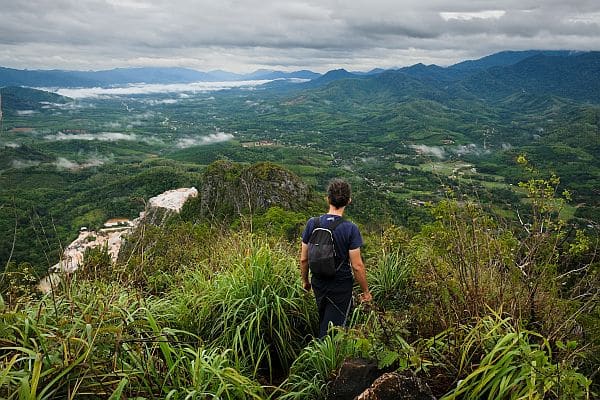
Ironically, as COVID dealt me a bad hand in my personal life, it also gave me some of the best business I ever had: I started writing about the way it impacted tourism in my acquired home of Penang where I had finally returned, how it affected Asians traveling in South America while I was locked down over there, how Asian musicians and artists reacted to the lockdowns in different Asian countries. I even wrote about my late parents and how I coped with grief, especially by hiking the hills behind George Town, an area that no other writer has explored as I did.
Another example is, as I’ve been a fan of B-movies and exploitation cinema since I was a kid, as I started consuming more and more films during the pandemic, then I pivoted into that type of writing by tapping into the coincidental rise of Southeast Asian (and especially Malaysian) genre cinema. I still write often about it in the South China Morning Post today, with no plans on stopping anytime soon.
That makes me a well-rounded expert in the popular culture of the countries I write about, and there’s nothing better than that in the eyes of editors and the algorithms of search engines. Are you an expert on Malaysia’s major cities? Ok, that’s average. Do you know its rock and punk venues, and have you ever played in some of them? That’s brilliantly cool and that’s what started bringing me the assignments.
Believe it or not, in 2020 I ended up writing more stories than ever before, while others kept lamenting. I am of the idea that if one doesn’t adapt and embrace change, he/she cannot evolve or adapt. Many bloggers and influencers freaked out when their lives of press trips and comped Instagram reels vanished in a couple of weeks. I never had any of that (not my thing, never will be, I don’t even have an Instagram account), and am constantly attracted to the idea of change. It breaks you, laying all your guts and bones bare, and forces you to give your best, or perish.
You were a student in my Travel Writing Overdrive course and it looks like you have applied a few lessons from that to your career in order to earn more money. Which steps have made the biggest difference?
Spread yourself as thin as possible—meaning, go as deep and wide as you can—and pursue everything that interests you. It’s OK to make mistakes and earning more money doesn’t need to be the most important thing: the most important is to keep the assignments flowing and the ideas coming and the fingers typing.
Embrace rejection with an open heart and reuse those same pitches, even if you have already sold them, later down the line elsewhere, as places keep changing, anniversaries keep coming, and ideas are more evergreen than a writer usually thinks. Your writing is YOURS! Re-edit it, change it, repackage it and resell it a hundred times if you can. Why not? That’s not plagiarism, is just being resourceful and smart, like a good contractor. Because that’s what we all are really.
Since you live in one of the greatest food cities in the world, where should people eat when they come to Penang, Malaysia?
I believe Penang’s fame as a food haven is quite overrated as of now: the good places got popular and went bad, portions keep shrinking because sellers are greedy, and prices keep rising. This said, trust your instinct and go (preferably outside of George Town) where you see many locals and it looks kind of dirty. That’s where Penang food, the real delicious food, is to be found. Hawker stalls, markets, sizzling woks. To get started learning about the dozens of dishes, read this post about Penang food I wrote.
Marco Ferrarese is a travel and culture writer based in Southeast Asia. He has freelanced for some of the world’s top travel publishers, including Travel + Leisure Southeast Asia, the Rough Guides, Lonely Planet, BBC Travel, The Guardian, Time Out, CNN Travel and many others. See his portfolio site here. All article photos by Kit Yeng Chan.
About Author

Tim
Tim Leffel is the author of Travel Writing 2.0 as well as several other successful books. His work has been recognized by SATW, NATJA, and the Solas Awards. He has contributed to more than 50 publications as a freelancer and is the editor of four websites and blogs, including the "Best online travel magazine" and the popular Cheapest Destinations Blog, established in 2003. He served six years as Conference Director for TBEX and five years as co-chair of the NATJA Advisory board.
Hi. My name is Husna. I am a self- published author of 5 books. I am currently writing a travel book “Looking for Shangri-La”.
I am just wondering if you know of any editor who I can hire in 6 months time. I am retired so I am looking for an affordable, pleasant editor to work with.
That’s not how it works I’m afraid. There are very few jobs for writers: probably 99.5% of travel writers are freelancers. You have to pitch each idea and hope that someone wants to buy it.