Interview With European Multi-site Publisher Jarco Smeenk
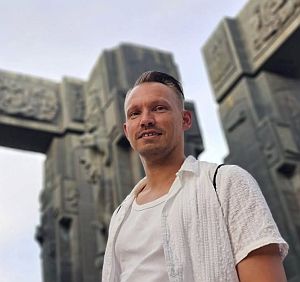 “Wait, how many sites?!” is the question other travel bloggers ask Jarco Smeenk, thinking that they heard wrong the first time. I first met him at TBEX Europe in Spain and I finally got around to asking him how he juggles so many blogs when I saw him again recently on a different continent. The man behind BWD Travel Guides gives us the scoop on his ramped-up business here on Travel Writing 2.0.
What were you doing before you became a publisher? How did you end up launching travel websites?
I worked as a biology teacher for many years, during which I developed a highly popular educational website to help students prepare for their exams. Curious to learn more about the world of SEO, I started a travel blog about Barcelona as a hobby, a city I visited every year with my students.
Once the website began ranking well on Google, I quickly realized there was serious business potential in the travel industry.
People gasp at TBEX when they hear how many destination sites you’re running. How many is it now and what do they cover?
Today, I run 75 different travel websites. That may sound like a lot, but I actually focus on just 20 European cities (plus Dubai) and their main attractions. Only one of my websites, SpaanseSteden.nl, covers an entire country: Spain.
Most of my city guides are available in four or five languages, and I use a separate domain for each language and target audience. For example, my Athens guides include AthensLover.com, AthenTipps.de, AtheneTips.nl, and VisiterAthenes.fr. My goal is to make every website feel as though it was created specifically for its local audience. I want readers to feel that the content was written with their language and travel needs in mind.
The obvious question everyone wants to know: how do you manage so many without a big team?
I don’t have a team at all. It’s just me, occasionally hiring freelance copywriters or translators. I believe the key to running this business successfully is staying focused on what you do best.
I create travel guides for first-time visitors planning a city trip of two to four days. I focus on what really matters to these travelers: the main attractions and tours they’re most likely to book. I don’t waste time creating content about things that change frequently, such as restaurants (there are already excellent platforms for that), temporary events, or minor attractions. Keeping that kind of content up to date simply takes too much time compared to the value it brings.
Running everything on my own also means learning to say no, or sometimes simply ignoring requests. My inbox is flooded with emails, and responding to all of them could easily become a full-time job. I only pay attention to messages that are genuinely relevant to my websites and content.
Fortunately, AI is making content maintenance much easier. I can now use ChatGPT to analyze entire websites and generate detailed reports on technical issues, missing content, and outdated information, such as opening hours and ticket prices. This saves me an enormous amount of time.
And perhaps my biggest time-saving decision of all: I don’t run any social media accounts for my travel websites! Instead, I focus entirely on SEO and SEA (paid search advertising) to attract visitors. For me, it’s all about focusing on what works and avoiding distractions.
Which site (or sites) have done better than expected in traffic or revenue. Why?
Revenue streams are constantly changing. A few years ago, Rome and Barcelona used to be the biggest cash cows, mainly because of their famous attractions that visitors needed to book in advance. Unfortunately, online ticket booking has become so common that some major attractions now sell out weeks in advance. Due to overtourism, it’s becoming increasingly difficult to offer available tickets to readers, which means missing out on a lot of potential affiliate sales.
Another interesting trend I’ve noticed is that my language-specific domains—such as .nl, .fr, and .de—consistently outperform my .com websites. Most travel content creators focus on English-language .com domains, but these are generally much harder to rank in Google, and conversion rates tend to be significantly lower as well. In my experience, almost every other language performs better in terms of affiliate conversions.
One exciting new niche I discovered last year is winter tourism in Lapland, with websites such as TromsoTravelGuide.com and RovaniemiGuide.com. Activities like husky sledding and Northern Lights safaris are incredibly expensive, which makes this market particularly interesting from an affiliate perspective.

Although these websites attract considerably less traffic than my major European city guides, the commissions per booking can be exceptionally high. Sometimes, a smaller niche with high-value bookings can be just as profitable.
Which revenue streams are working best for you right now?
My revenue comes entirely from affiliate marketing. I mainly work with GetYourGuide for tours and day trips, Tiqets for attraction tickets and city passes, and Stay22 for hotel bookings.
When it comes to accommodation, nothing beats the AI-powered technology Stay22 is offering. Their smart solutions have been a real game-changer for my hotel affiliate revenue.

If you wanted to take someone to a cool place in Europe that’s not one of the most famous places, where are you headed?
That would definitely be my hometown of Breda! Not only is it a charming historic city, but it’s also one of the best places in the Netherlands to experience Carnival. One of the absolute highlights is the Carnival parade in the nearby village of Prinsenbeek. The floats are all handmade using traditional techniques, and some are as tall as a five-story building! It’s a truly spectacular sight that you won’t find in most travel guides. And that’s exactly the kind of authentic local experience that makes traveling so special.
Jarco Smeenk is a Dutch travel content creator and founder of BWDTravelGuides.com, a network of 75 travel guide websites dedicated to helping travelers discover top attractions, hidden gems, and authentic local experiences. His websites primarily focus on popular European destinations, including Rome, Athens, Barcelona, Venice, and Edinburgh, offering practical travel tips and firsthand insights.
About Author

Tim
Tim Leffel is the author of Travel Writing 2.0 as well as several other successful books. His work has been recognized by SATW, NATJA, and the Solas Awards. He has contributed to more than 50 publications as a freelancer and is the editor of four websites and blogs, including the "Best online travel magazine" and the popular Cheapest Destinations Blog, established in 2003. He served six years as Conference Director for TBEX and five years as co-chair of the NATJA Advisory board.